
Signs you need this
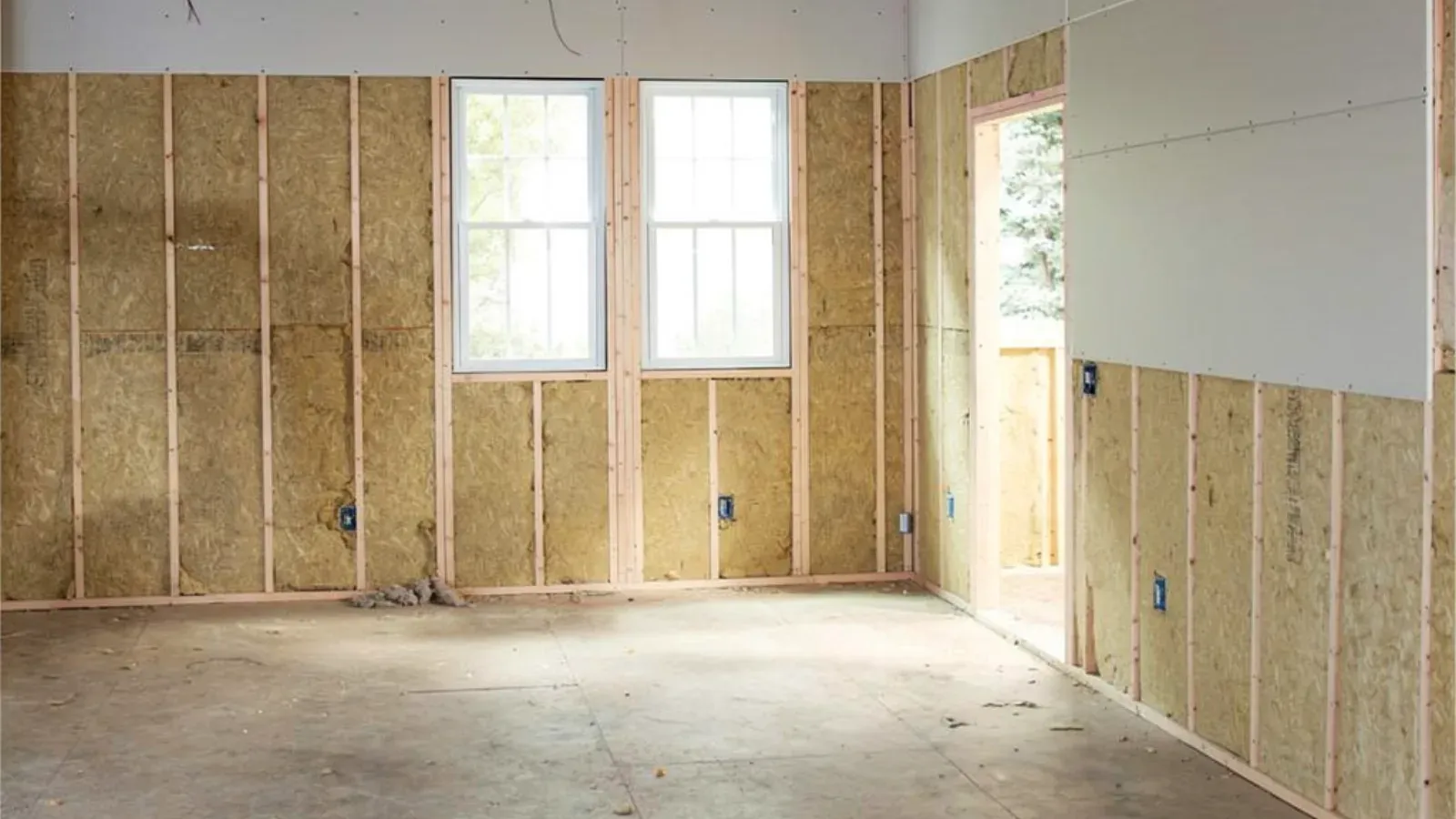
- • Framing is up (new addition, gut-reno, or a converted attic or garage) but the walls are still open studs with no board on them
- • An old two- or three-family unit is being gutted down to the studs for a full renovation, and every wall in the unit needs to be re-hung from scratch
- • A general contractor has finished framing on a room addition or infill unit and needs a drywall crew on the schedule before the next trade can start
- • A homeowner comparing quotes realizes hanging board on bare studs is a different scope than patching a wall that already has board on it
From bare studs to a paint-ready wall
A framed room is not a finished room, and the gap between the two is this service. Cambridge Elite Drywall & Plaster hangs board on open studs, whether that’s a new room addition, a gut-reno rehang across an entire unit, or a new-construction infill build, and carries the work through taping and finishing so the general contractor’s next trade has a clean, paint-ready wall to work against, not a stack of open framing.
Reading the framing before the board goes up
Every hang starts with the framing itself, and Cambridge’s building stock makes that step more variable than it looks on paper. New-construction infill units and modern additions are typically framed to a consistent, square grid, which lets the crew move through the hang efficiently. Older two- and three-family homes in North Cambridge and Old Cambridge are a different story: decades of settling and additions built onto additions mean framing is rarely perfectly square, and the crew adjusts board layout, cutting, and fastener spacing to the walls actually in front of it rather than an idealized grid. Skipping that adjustment is how a hang ends up with visible gaps at corners or seams that fight the taping crew later.
Fire-rated assemblies on shared walls
Cambridge’s dense triple-decker and two-family stock means a lot of this work involves demising walls, the shared wall or ceiling between two separate units. Those assemblies aren’t optional upgrades, they’re a code requirement: a wall separating occupancies needs a UL-listed fire-rated assembly, which specifies the exact board type (typically Type X), the number of layers, and the fastener pattern required to earn that rating. Substituting standard board or an approximate fastener schedule doesn’t just risk a failed inspection, it leaves the actual fire separation weaker than the design calls for. On a conversion or addition that creates a new shared wall between units, this is one of the first things Cambridge Elite Drywall & Plaster confirms before hanging a single sheet.
Working inside a general contractor’s schedule
Most hangs on room additions and gut-renos happen as one step in a longer trade sequence: framing passes inspection, insulation goes in, then drywall closes the wall before electrical trim, texture, and paint follow. A hang crew that shows up off-schedule or takes longer than planned holds up every trade behind it. Cambridge Elite Drywall & Plaster works directly off the general contractor’s timeline, confirming board type and any fire-rated requirements before the framing inspection so there’s no scramble once the crew is cleared to start.
From hang to finish, in one continuous scope
Hanging the board is only the first half of this service. Once sheets are up, seams get taped and built out in staged coats of joint compound, sanded between passes, and finished to whatever level the room calls for, usually a standard Level 4 for most rooms, occasionally something smoother for a feature wall or a match to an existing premium finish elsewhere in the house. Handling hang and finish as one continuous job, rather than splitting it across two separate crews, is what keeps the seams, corners, and overall wall quality consistent from the studs to the primer coat.
Materials & standards
Products & materials we use
- USG Sheetrock
- National Gypsum Gold Bond
- Georgia-Pacific ToughRock
- CertainTeed
Standards & codes we work to
- MA 780 CMR (Massachusetts State Building Code)
- ICC/IBC
- ASTM C1396
- GA-214 finish levels
- UL fire-rated assemblies
What the terms mean
- Metal-stud (light-gauge) framing
- Demising wall
- Fire-rated assembly
- Type X
- Fastener schedule
- Screw pattern
- Joint compound
- Mud and tape
- Shaft wall
Options & variants
| Option | When it applies | Cost |
|---|---|---|
| Single room or addition hang and finish | One new room, attic conversion, or garage build-out | Lowest |
| Full gut-reno rehang | Entire unit stripped to studs, every wall and ceiling re-hung | Higher, scales with square footage |
| New-construction infill hang | New-build addition or accessory unit, walls framed from scratch | Moderate to higher |
| Fire-rated assembly hang | Shared walls or ceilings between units in a two- or three-family conversion | Higher |
What affects cost
- • Total square footage of wall and ceiling area to be hung, plus ceiling height on any room with vaulted or raised ceilings
- • Whether any walls are demising or fire-rated assemblies between units, which require Type X board and a specific fastener and taping pattern
- • Layout complexity: number of corners, openings, soffits, and bulkheads
- • Board type needed, standard versus moisture-resistant or soundproof board depending on the room
- • Whether the crew is hanging into open framing or working around existing mechanicals, ductwork, and electrical
What to expect
- 1
Review the framing
Cambridge Elite Drywall & Plaster reviews the framing plan or walks the framed space with the homeowner or general contractor, confirming board type and any fire-rated assembly needs before scheduling.
- 2
Hang the board
Board is measured, cut, and hung to the framing, with sheets staggered and fastened to the correct screw pattern and spacing for the wall or ceiling assembly.
- 3
Tape and first coats
Seams are taped and the first coats of joint compound go on, building the joint up in stages rather than one thick pass.
- 4
Sand and finish
The wall is sanded between coats and finished to the level specified for that room, whether that's a standard Level 4 or a smoother finish for a feature area.
- 5
Prime and hand off
The space is left primed and ready for paint, with any punch-list items from the general contractor's walkthrough addressed before the crew leaves.
When this isn’t the right call
- If the board is already hung and the job is only mudding, taping, and finishing, that's drywall taping and finishing, not an open-stud hang.
- If the project is a basement remodel specifically, with moisture and framing-off-masonry considerations, that's basement drywall finishing.
- If existing drywall has small holes, dents, or damage rather than an open-stud hang, that's drywall repair and patching.
- If the walls need a full Level 5 flawless finish rather than a standard hang and finish, that's skim coat and Level 5 finish.
Frequently asked questions
Can you hang drywall on a room addition before the general contractor's other trades start? +
Yes, that's the most common way this work gets scheduled. Cambridge Elite Drywall & Plaster works directly off the framing inspection date and slots into the trade sequence so insulation, electrical, and the next steps aren't held up.
Do you hang drywall on new construction and additions, or only repair existing walls? +
Both, but this specific service covers open-stud hanging: new additions, gut-reno rehangs, and new-construction infill units. Repairing existing walls that already have board on them is a separate, smaller-scope service.
What's different about hanging drywall in an older Cambridge two- or three-family versus new construction? +
Older triple-deckers often have irregular framing, out-of-square walls, and shared walls between units that need a fire-rated assembly, none of which show up in new-construction framing built to modern tolerances. The crew adjusts the hang to the framing it actually finds rather than assuming a clean grid.
Do shared walls between units need special board or assembly? +
Yes. A demising wall between two units in a converted two- or three-family typically needs a UL-listed fire-rated assembly, which means Type X board and a specific fastener and taping pattern, not standard board hung the same way as an interior room wall.
How long does hanging and finishing a full room addition take? +
A single room addition typically runs several days from hang through final finish sanding, since joint compound needs to dry and cure between coats. A full gut-reno rehang across a whole unit takes longer and is usually sequenced around the rest of the general contractor's schedule.
Will the walls match the finish level of the rest of the house? +
That's confirmed before the hang starts. Most rooms are finished to a standard Level 4, but if the addition needs to match an existing premium finish or a specific paint plan calls for something smoother, that's scoped up front rather than assumed.
Do you need a permit for a room addition's drywall in Cambridge? +
The framing and structural work typically carries the permit through the City of Cambridge Inspectional Services Department, and any addition to a home inside a historic district also goes through the Cambridge Historical Commission. The drywall hang itself follows once framing has passed inspection.