
Signs you need this
- • Seams, joints, or nail pops that show through paint, especially under window light or a strong ceiling fixture
- • A textured wall, knockdown, orange-peel, or an older hand-troweled finish, that reads as dated next to a modern remodel
- • A wall covered in old patches from various repairs that never blended, so the surface looks uneven even after paint
- • Plans for a deep flat paint color, a high-gloss finish, or wallpaper, all of which show every imperfection underneath
What Level 5 finish actually means, and when it’s worth it
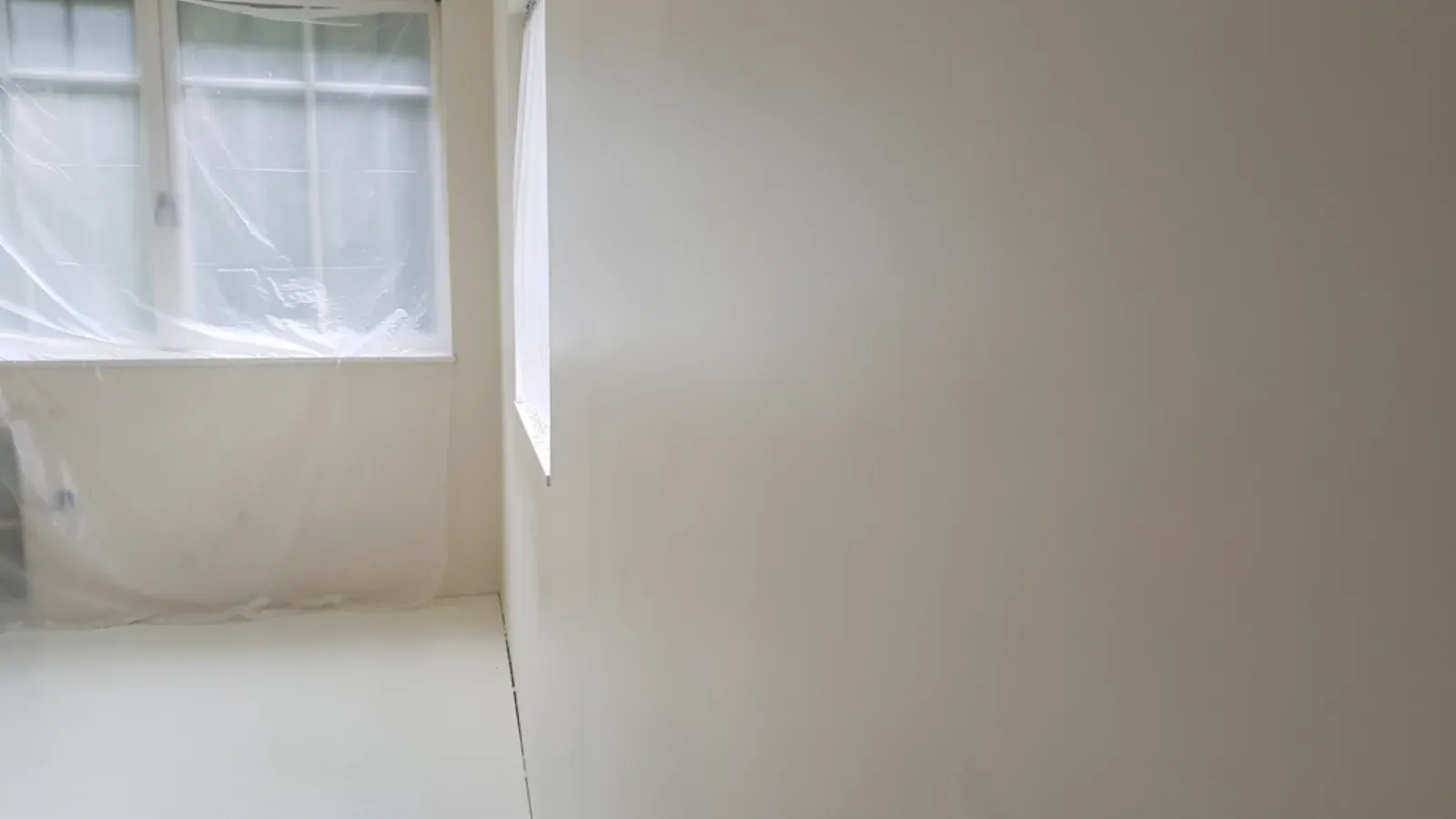
The Gypsum Association defines five finish levels for drywall, numbered 0 through 5, and most rooms in a home never need to go past Level 4. Level 4 tapes and finishes the seams and fastener heads well enough that a normal wall in normal light looks flat and clean under standard paint. Level 5 goes further: a thin, uniform skim coat of joint compound goes over the entire surface, not just the joints, so there is no difference in texture or absorption between the taped seams and the field of the board. Under a strong side light, that difference is exactly what shows up as faint ghosting along every seam on a wall finished only to Level 4. Cambridge Elite Drywall & Plaster reaches for Level 5 specifically where that ghosting would be a problem: rooms with large windows throwing raking light across the wall, a deep flat or high-gloss paint color, or wallpaper going up over the drywall.
Where this shows up most in Cambridge
West Cambridge and Brattle Street carry some of the city’s largest premium remodel budgets, and those projects tend to specify Level 5 as a baseline rather than an upgrade, particularly in kitchens and primary suites with big window walls. But the same logic applies anywhere in the city where a room gets strong natural light or a design plan calls for a bold, flat paint color. A living room addition in Cambridgeport with a new bank of windows needs the same attention to raking light as a Brattle Street renovation, even if the rest of the house is finished to a standard level.
Skimming new board versus resurfacing an old wall
Skimming bare, newly hung drywall is the straightforward version of this work: tape the seams, then apply thin coats of joint compound across the full surface, sanding lightly between each pass until the wall reads flat under a raking light check. Resurfacing an existing wall is a different scope. Many Cambridge homes carry a knockdown or orange-peel texture applied decades ago, and converting that to a modern flat Level 5 finish means knocking down or sanding the existing texture to a workable base before the skim coats can go on. It’s more labor than starting from bare board, but it’s how a dated textured wall becomes a clean, contemporary surface without tearing the wall out and starting over.
The coat-by-coat process
Level 5 isn’t one thick application, it’s several thin ones. Each coat of joint compound needs to dry fully before it gets sanded and the next coat goes on, and rushing that sequence is what leaves a wall with visible ridges or sanding marks once paint goes on. The crew checks the surface under raking light, often with a work light held low against the wall, at each stage to catch anything that still needs attention before moving to the next coat. That checking process is what separates a true Level 5 finish from a wall that was simply skimmed once and called done.
What happens after the skim coat
A finished Level 5 wall gets a final sand and a coat of primer, then it’s ready for paint. The primer matters here as much as the skim coat itself, since an unprimed or poorly primed skim coat can flash unevenly under paint, showing the same kind of imperfection the skim coat was meant to eliminate. Whether the wall is being finished for a deep charcoal accent color, a high-gloss trim package, or wallpaper, Cambridge Elite Drywall & Plaster hands it off in the condition that finish demands.
Materials & standards
Products & materials we use
- USG Sheetrock
- National Gypsum Gold Bond
- CertainTeed
- Georgia-Pacific ToughRock
- FibaTape
Standards & codes we work to
- GA-214 finish Levels 0-5
- ASTM C1396
- MA 780 CMR (Massachusetts State Building Code)
- Massachusetts Construction Supervisor License (CSL)
- Massachusetts Home Improvement Contractor (HIC) registration
What the terms mean
- Skim coat
- Level 5 finish
- Joint compound
- Mud and tape
- Corner bead
- Knockdown texture
- Orange-peel
- Raking light
Options & variants
| Option | When it applies | Cost |
|---|---|---|
| Standard Level 4 finish | Most rooms, moderate lighting, satin or eggshell paint | Baseline |
| Full Level 5 skim coat on new board | New construction or addition, flawless finish from the start | Higher |
| Resurfacing existing textured wall to smooth | Converting an old knockdown or orange-peel wall to flat | Higher, more labor to remove texture first |
| Accent or feature wall skim only | One wall gets the premium finish, rest of room stays standard | Moderate, scoped to one surface |
What affects cost
- • The finish level requested, since Level 5 takes more coats and more sanding than a standard Level 4 finish
- • Whether the crew is skimming bare new board or resurfacing an existing textured or heavily patched wall
- • Total square footage and ceiling height, including any areas that need scaffolding
- • Lighting conditions in the room, since a wall lit by raking light near large windows demands a higher standard of flatness
- • The paint sheen and color planned, since gloss and deep flat colors show more than a standard eggshell
What to expect
- 1
Call and describe the room
You call and describe the room, the lighting, and what paint or finish you're planning. Cambridge Elite Drywall & Plaster schedules a look at the walls.
- 2
Assess the surface
The crew assesses whether the surface is bare board, painted drywall, or an existing texture, and recommends the finish level that fits the plan.
- 3
Prep if resurfacing
If resurfacing, the existing texture is knocked down or sanded to prepare a workable base.
- 4
Apply and sand coats
The crew applies several thin coats of joint compound across the full surface, sanding lightly between each coat to build a level plane.
- 5
Final check and prime
The wall is given a final sand, checked under raking light for any remaining imperfection, then primed and left ready for paint.
When this isn’t the right call
- If the goal is just to blend a single small patch into existing texture rather than resurface the whole wall, that's texture matching, not a full skim coat.
- If the ceiling has a popcorn or acoustic texture that needs to come off first, that's popcorn ceiling removal.
- If the wall is original lath-and-plaster in a historic home, the approach is closer to plaster restoration than a standard skim coat.
Frequently asked questions
What is a Level 5 finish, exactly? +
It's the highest finish level defined by the Gypsum Association's GA-214 standard, meaning the entire wall gets a thin skim coat of joint compound rather than just the taped seams. It removes any visible texture difference between the joints and the rest of the board, so the surface reads as one continuous plane.
Do I actually need Level 5, or is a standard finish enough? +
Most rooms with normal lighting and a satin or eggshell paint look fine with a standard Level 4 finish. Level 5 earns its cost in rooms with strong raking light, deep flat or high-gloss paint, or wallpaper, all of which expose seams that a standard finish would hide just fine.
Can you skim coat over my existing textured wall? +
Yes. The existing knockdown, orange-peel, or hand-troweled texture gets knocked down or sanded first, then skimmed the same way as new board. It takes more prep than skimming bare drywall, which is reflected in the scope.
How long does the process take between coats? +
Each coat of joint compound needs time to dry before sanding and the next coat goes on, so a full Level 5 skim on a room typically spans several days rather than one. Cambridge Elite Drywall & Plaster sequences the coats so the crew isn't waiting on-site between each one.
Does skim coat work on ceilings too? +
Yes, ceilings can be skimmed to Level 5 the same way as walls, though the overhead work and any needed scaffolding add to the labor.
Will a Level 5 wall stay smooth over time, or will cracks show up later? +
A properly skimmed wall on solid, well-fastened board holds up well. Cracking down the road is more often a sign of movement in the framing or board underneath than a failure of the skim coat itself.