Signs you need this
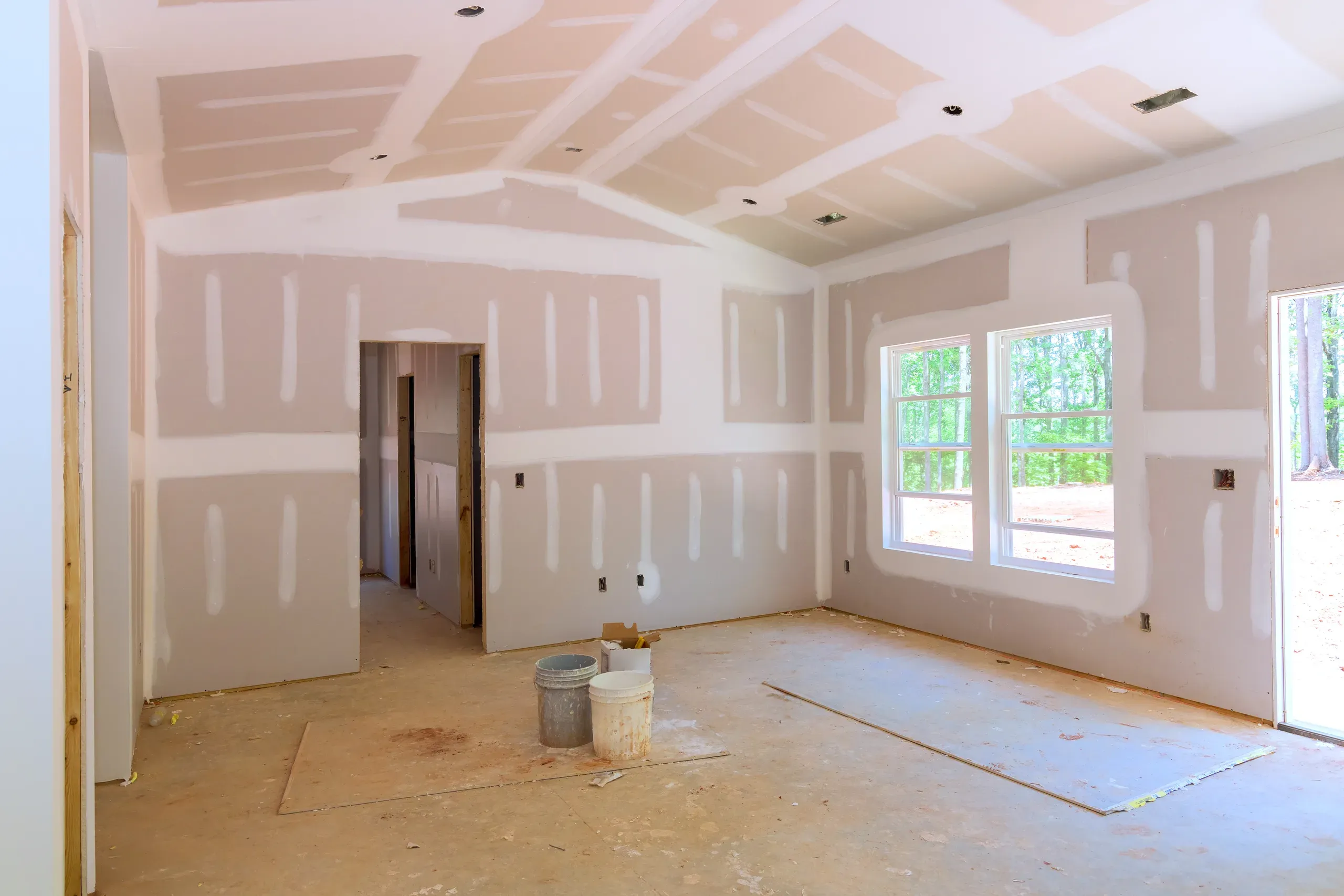
- • Board is hung throughout a room or unit, screws visible, seams unfinished, and nothing is ready for paint
- • A general contractor's framing and hanging crew has moved on to the next job, but no one on-site actually mudded and taped the walls
- • A homeowner or GC can see every seam, screw dimple, and butt joint standing out under the work lights
- • A previous taping job looks rough: visible ridges, sanding marks, or seams that show through primer, even though the board underneath is fine
The trade that makes someone else’s hang disappear
Hanging drywall and finishing it are two different skill sets, and on most jobs, they’re done by two different crews. Cambridge Elite Drywall & Plaster is regularly the second crew: the finisher a general contractor calls once the framing and hanging trade has moved on, to take board that’s up but rough, screws showing and seams visible, and turn it into a wall a painter can actually paint.
Why hanging and finishing split apart
A framing and hanging crew is optimized to move fast: measure, cut, fasten, move to the next room. Finishing rewards the opposite instinct, staged coats with drying time built in, careful sanding, and a final check under work light before calling it done. Trying to do both well with the same crew on the same day usually means one of the two gets rushed, and it’s almost always the finish that suffers, since a rushed hang is still structurally fine while a rushed finish shows on every wall the day paint goes on. That’s why on most general contractor jobs in Cambridge, the hanging crew and the finishing crew are two separate calls, and why a general contractor’s schedule usually has a clear handoff point between them.
What separates a Level 4 finish from a rough one
The Gypsum Association’s GA-214 standard defines Level 4 as the baseline finish for most rooms: every seam taped and embedded properly, built out in compound wide enough that the joint blends into the field of the board, sanded smooth, with screw dimples filled and corners crisp. A rough finish usually fails at one of those specific steps, tape pressed on without being fully embedded in a first coat, compound applied too thin to actually bridge the seam, or sanding stopped before the ridge was fully knocked down. None of those failures are visible on the wall itself until primer or paint goes on and raking light or a flat sheen exposes exactly where the shortcuts were taken.
Correcting a finish that’s already gone wrong
Not every job starts from bare board. A meaningful share of the calls Cambridge Elite Drywall & Plaster gets are corrections: a homeowner or general contractor who already has a taping job done, but the seams show, or the surface has visible ridges under paint. Fixing that isn’t a matter of adding one more coat over the existing problem, since the existing compound and tape didn’t hold the joint the first time and won’t the second. The affected seams get cut back to expose the actual failure, whether that’s unembedded tape or too-thin compound, and rebuilt properly from that point rather than papered over again.
Finishing for condo turnovers and multi-unit consistency
A specific version of this work in Cambridge is the condo turnover, common in the older building stock around Harvard Square, Central Square, and Inman Square where units change hands or get renovated regularly. A unit going up for sale or a new lease needs a finish that reads clean and consistent under a buyer’s or tenant’s close inspection, and any inconsistency between rooms, or between the new work and an existing wall, stands out in a way it wouldn’t in a private home nobody’s evaluating room by room. Matching finish quality across an entire unit, not just getting one room to look good, is what this kind of turnover work actually demands.
Materials & standards
Products & materials we use
- USG Sheetrock
- National Gypsum Gold Bond
- CertainTeed
- FibaTape
Standards & codes we work to
- GA-214 finish levels (Level 0-5)
- ASTM C1396
- MA 780 CMR (Massachusetts State Building Code)
What the terms mean
- Mud and tape
- Joint compound
- Corner bead
- Screw dimples
- Level 4 finish
- Seam taping
- Fastener seating
Options & variants
| Option | When it applies | Cost |
|---|---|---|
| Standard Level 4 finish | Most rooms, normal lighting, satin or eggshell paint | Baseline |
| Finish-only on someone else's hang | Board already up from a GC's framing crew or a homeowner's own hang | Priced on condition of the hang |
| Correction of a prior rough finish | Existing taping job with visible ridges, seams, or sanding marks | Moderate |
| Commercial corridor or unit finish | Multi-unit or light commercial space needing consistent finish across several rooms | Scales with square footage |
What affects cost
- • Total square footage of seams, corners, and screw dimples to finish, which tracks with wall count more than floor area alone
- • The condition of the hang itself: well-hung board finishes faster than a hang with uneven seams or poorly set fasteners
- • Whether the job is a fresh finish or a correction of prior rough work
- • The finish level requested, since a standard Level 4 takes fewer coats and less sanding than a smoother finish
- • Number of rooms or units and whether the finish needs to read consistently across all of them
What to expect
- 1
Assess the hang
Cambridge Elite Drywall & Plaster looks at the hung board, checking fastener seating, seam gaps, and overall hang quality before confirming the finish plan and schedule.
- 2
Embed tape
Tape is embedded into every seam, corner, and joint, set into a first coat of joint compound rather than pressed on dry.
- 3
Build the coats
Additional coats of compound go on in stages, each one wider than the last, with drying time between coats rather than one thick application.
- 4
Sand smooth
The wall is sanded smooth between and after coats, with screw dimples and corners checked alongside the seams.
- 5
Final check and hand off
The finished wall is checked under work light for anything that still shows, then handed off primed and ready for the painter.
When this isn’t the right call
- If the board isn't hung yet and the job starts from open studs, that's drywall installation and hanging.
- If the walls need a full Level 5 flawless finish for critical raking light or a premium remodel, that's skim coat and Level 5 finish.
- If the work is a basement specifically, with moisture and foundation-framing considerations, that's basement drywall finishing.
- If the issue is a small hole, dent, or isolated damage rather than unfinished seams across a room, that's drywall repair and patching.
Frequently asked questions
Can you finish drywall that someone else hung? +
Yes, that's the core of this service. Cambridge Elite Drywall & Plaster regularly finishes board hung by a general contractor's framing crew, another contractor, or a homeowner, and doesn't need to have handled the hang itself.
What's the difference between taping and finishing, and just mudding over screws? +
Taping and finishing embeds tape into every seam and builds the joint out in several staged coats of compound so the seam disappears under paint. Just mudding over screw heads without properly taping the seams themselves leaves the joints visible once paint goes on, which is the rough finish look this service corrects.
My general contractor's crew hung the drywall but didn't finish it. Is that normal? +
Yes, hanging and finishing are often split between different crews or trades, especially on larger jobs where a framing crew moves fast between sites and doesn't specialize in finish work. Bringing in a dedicated finisher after the hang is a standard part of a construction schedule, not a sign something went wrong.
What is a Level 4 finish, and is it enough for my room? +
Level 4 is the standard finish level defined by the Gypsum Association's GA-214 standard, where seams and screw dimples are taped and finished well enough to look flat and clean under normal paint and lighting. It's the right finish for the large majority of rooms; only spaces with strong raking light or a deep flat or high-gloss paint plan typically need to step up further.
How long does taping and finishing take before the painter can start? +
Each coat of compound needs time to dry before the next goes on and before final sanding, so a standard room typically runs several days from first tape to paint-ready, not one continuous day. Cambridge Elite Drywall & Plaster coordinates that timeline with the general contractor's painter so there's no gap or overlap in the schedule.
Can you fix a taping job that already looks rough? +
Yes. Correcting a rough finish means cutting back the areas where compound was applied too thin or tape wasn't properly embedded, then rebuilding those spots correctly rather than adding another thin coat over the same problem.
Do you finish drywall in occupied condo units during a turnover? +
Yes, condo turnovers and unit renovations in buildings around Harvard Square, Central Square, and Inman Square are common work, and the crew coordinates access and scheduling around the building and any tenant timeline.