
Signs you need this
- • A bumpy, textured popcorn or acoustic ceiling that looks dated next to an otherwise updated room
- • Yellowed, stained, or discolored popcorn texture, especially in kitchens and bathrooms
- • Popcorn texture that's begun flaking or dropping small bits, particularly if it's ever been painted over
- • A ceiling that's difficult to clean or that collects visible dust in its texture
Why popcorn ceiling removal starts with testing, not scraping
Popcorn and acoustic ceiling texture went up across huge amounts of American housing stock from the 1950s through the late 1970s, prized at the time for hiding seams and dampening sound cheaply. Cambridge’s dense two- and three-family buildings across North Cambridge, Cambridgeport, and Inman Square carry plenty of original ceilings from that era, many of them untouched since installation. What most owners don’t realize is that some of those products were manufactured with asbestos fibers mixed into the texture, a practice that continued in various forms until it was banned in 1978. Cambridge Elite Drywall & Plaster treats every ceiling old enough to fall in that window the same way: test first, remove second. Scraping an untested older ceiling is the one mistake that turns a straightforward cosmetic project into a health hazard, because it’s the disturbance itself, the wetting and scraping, that releases fibers into the air if they’re present.
How the testing actually works
A small sample of the ceiling texture is taken and sent to a certified lab, following Massachusetts Department of Labor Standards guidelines for asbestos testing. That result comes back before any scraping, sanding, or demolition touches the ceiling. If the sample comes back clear, the removal proceeds as a standard wet-scrape job. If it comes back positive, the ceiling isn’t necessarily gone for good, it just changes the approach. In many cases, skim-coating directly over the intact popcorn texture seals it permanently under a new smooth or lightly textured surface without ever disturbing the original material, which is often the more practical route than a licensed abatement removal. Cambridge Elite Drywall & Plaster walks through both options with the homeowner once results are in.
What removal actually involves
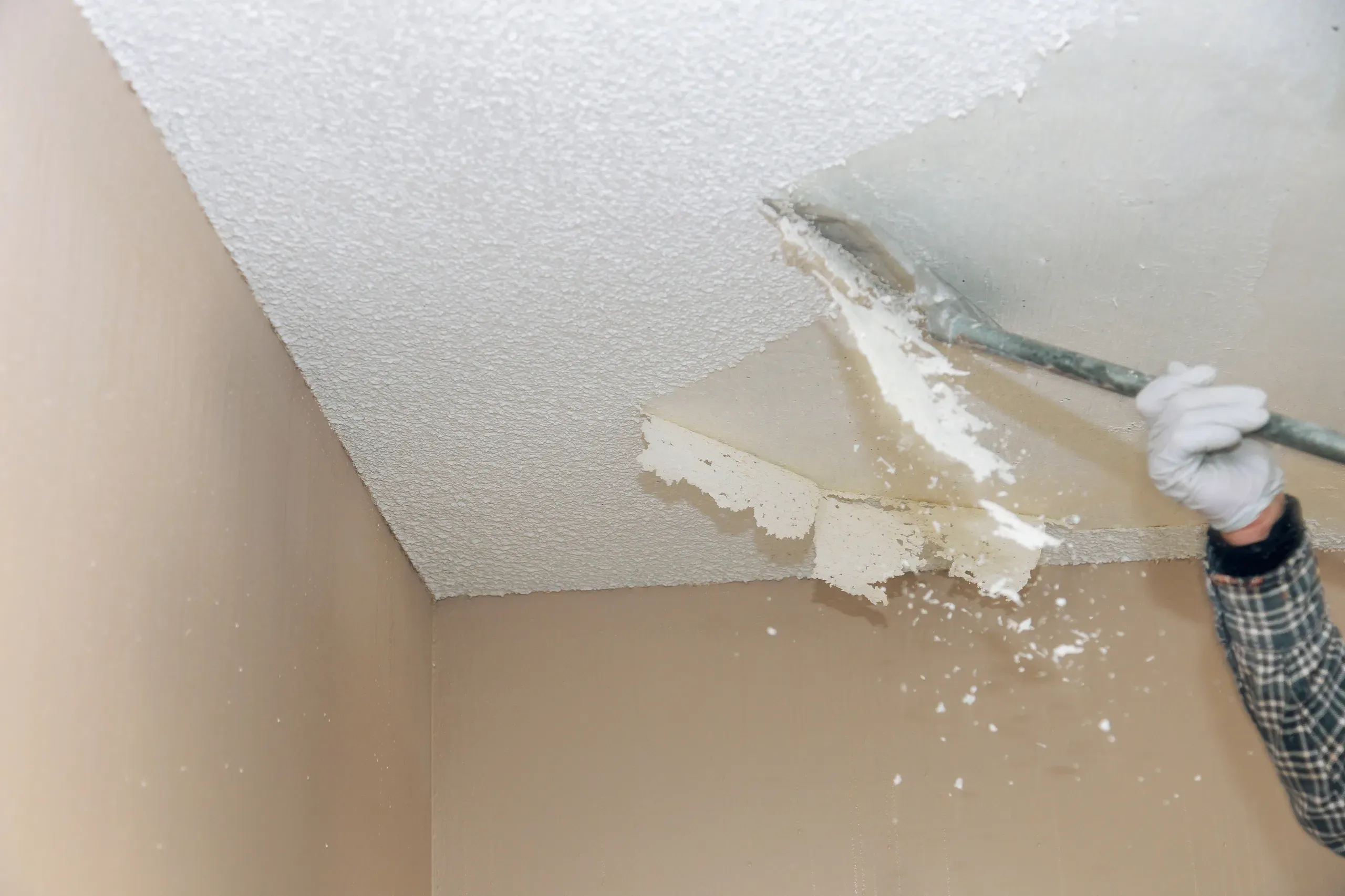
On a ceiling that tests clear, the crew wets the texture down section by section and scrapes it off with a wide taping knife, working carefully to avoid gouging the drywall or plaster underneath. Ceilings that have been painted over take longer, since the paint seals the texture against the water that’s supposed to soften it for scraping. Once the texture is off, whatever’s underneath, whether that’s original drywall or in some older homes a plaster ceiling, gets checked for damage. Water stains hidden under decades of popcorn texture aren’t unusual, and any of that gets repaired before the finish work starts.
Finishing the ceiling afterward
A scraped ceiling isn’t done once the texture is gone. The surface underneath is rarely smooth on its own, so it gets skimmed with joint compound and sanded to whatever finish level the owner wants. Some Cambridge homeowners go all the way to a flat Level 5 finish for a fully modern look, particularly in kitchens and living rooms with strong overhead lighting that would show every imperfection in a lesser finish. Others prefer a lighter knockdown or orange-peel texture, which still updates the look of the room but takes less labor to finish than a dead-flat ceiling. Either way, the ceiling gets primed and left ready for paint, with the popcorn gone for good and the room finally reading as current instead of dated.
Materials & standards
Products & materials we use
- USG Sheetrock
- National Gypsum Gold Bond
- Georgia-Pacific ToughRock
Standards & codes we work to
- MA Dept. of Labor Standards (asbestos)
- MA 780 CMR (Massachusetts State Building Code)
- GA-214 finish Levels 0-5
- EPA RRP (pre-1978 lead-safe)
- Massachusetts Construction Supervisor License (CSL)
- Massachusetts Home Improvement Contractor (HIC) registration
- EPA RRP Lead-Safe Certified Firm
What the terms mean
- Popcorn ceiling
- Asbestos testing
- Joint compound
- Skim coat
- Level 5 finish
- Knockdown texture
- Orange-peel
Options & variants
| Option | When it applies | Cost |
|---|---|---|
| Scrape and skim smooth | Asbestos-clear ceiling, straightforward removal | Lower to moderate |
| Skim-coat over intact texture | Testing finds asbestos and disturbing the texture isn't the safer option | Moderate |
| Full removal and new drywall | Popcorn ceiling is badly damaged, water-stained, or sagging underneath | Higher |
| Refinish to knockdown or orange-peel instead of flat | Owner wants an updated texture rather than a fully smooth ceiling | Moderate |
What affects cost
- • Whether asbestos testing comes back positive, since that changes the approach from scraping to containment or encapsulation
- • Ceiling square footage and height, including whether scaffolding or extended ladder work is needed
- • Whether the popcorn texture has been painted over, which makes it harder to wet and scrape than unpainted texture
- • Condition of the surface underneath, including any water staining or damage hidden by the texture
- • The finish level chosen after removal, since a full Level 5 smooth ceiling takes more work than a new texture
What to expect
- 1
Call and flag the ceiling age
You call and describe the ceiling's age and condition. Cambridge Elite Drywall & Plaster schedules a look and flags whether the home's age calls for asbestos testing.
- 2
Test before touching anything
On pre-1980 ceilings, a sample is taken and sent to a certified lab under Massachusetts Department of Labor Standards guidelines. Work does not begin until results come back.
- 3
Scrape or cover based on results
If the ceiling tests clear, the crew wets and scrapes the popcorn texture off. If it tests positive, the safer approach, often skim-coating over the intact texture, is discussed with you before proceeding.
- 4
Repair the surface underneath
Once the texture is off or safely covered, any damage or unevenness in the ceiling underneath is repaired.
- 5
Finish and prime
The ceiling is skimmed, sanded, and finished to a smooth Level 5 surface or a new texture like knockdown or orange-peel, then primed ready for paint.
When this isn’t the right call
- If you only need one small area of ceiling texture blended after a patch, not a full ceiling removed, that's texture matching.
- If the ceiling is stained or sagging from an active leak rather than just dated texture, that's water damage drywall repair.
- If the ceiling is original lath-and-plaster rather than a sprayed popcorn texture over drywall, that's plaster repair or a plaster-to-drywall conversion.
Frequently asked questions
Does my ceiling actually have asbestos? +
There's no way to tell just by looking. Acoustic and popcorn ceiling products made before the early 1980s sometimes contain asbestos, so any ceiling from that era gets tested before Cambridge Elite Drywall & Plaster disturbs it.
How does the testing work? +
A small sample of the texture is taken and sent to a certified lab, following Massachusetts Department of Labor Standards guidelines. Work on the ceiling waits until the results come back.
Can you just remove the popcorn without testing first? +
Not on a ceiling old enough to potentially contain asbestos. Scraping first and testing later is exactly backwards, since scraping is what releases fibers if they're present. Testing always comes first on an older ceiling.
What happens if the test comes back positive? +
The options are usually a licensed abatement contractor removing the material under containment, or skim-coating directly over the intact texture so it's sealed and never disturbed. Cambridge Elite Drywall & Plaster walks through which makes sense for your ceiling and budget.
Can popcorn texture just be painted over instead of removed? +
It can, and it's a cheaper short-term option, but the texture stays and the ceiling still reads as dated. Most owners calling for this service want the texture actually gone, not just covered.
How messy is the removal process? +
Wetting and scraping popcorn texture is a wet, dusty process. The crew protects floors, furniture, and fixtures in the room before starting and handles cleanup as part of the job.
Do I have to go smooth, or can you leave a texture on the ceiling? +
Either works. Some owners want a fully smooth Level 5 ceiling, others prefer a lighter knockdown or orange-peel texture that still looks updated but takes less finishing work.