
Signs you need this
- • A renovation is planned and the existing drywall or plaster needs to come out before new work can start
- • A kitchen or bathroom gut requires the surrounding walls and ceiling stripped to the studs
- • A textured popcorn ceiling from before the 1980s needs to come down, raising the question of testing first
- • An outdated or damaged lath-and-plaster wall needs to be cleared out before it's converted to drywall
Tear-out is not just demolition
Pulling drywall or plaster off a wall looks simple from the outside, but on Cambridge’s older housing stock the demo phase carries more risk than the framing or finish work that follows it. Cambridge Elite Drywall & Plaster treats every tear-out on a pre-1980s property as a testing and containment job first and a demolition job second, because the two most common hazards, asbestos and lead, are invisible until they’re disturbed.
Testing before anything gets touched
Popcorn ceiling texture and older joint compound formulations sold before the 1980s sometimes contain asbestos, and there’s no way to tell by looking at it. Before any of that material is cut into, it gets tested, following MA Dept. of Labor Standards protocol, and the removal plan is built around the result. Paint on any surface in a home built before 1978 is treated as a potential lead hazard under EPA RRP rules, which changes how the crew cuts, contains, and disposes of the material regardless of what the plaster or drywall itself turns out to be. Skipping this step to save a day on the schedule is how a routine gut renovation turns into a contamination problem.
Containment: keeping dust out of the rest of the house
A full room or unit demo generates a genuinely large volume of dust, and in a dense city like Cambridge, where a triple-decker’s units share walls, floors, and often HVAC returns, uncontained dust doesn’t stay in one room. The crew seals the work area with plastic sheeting and, for occupied buildings or asbestos-tested areas, runs negative air equipment that pulls air out through a filter rather than letting it spread through the rest of the home. This matters as much for a homeowner staying on-site during a partial renovation as it does for a condo association concerned about shared hallways and stairwells.
Plaster versus drywall: the weight and labor difference
Original lath-and-plaster, common throughout Old Cambridge and Mid-Cambridge’s pre-1940 housing, is dramatically heavier than drywall, and it comes apart differently, in chunks and dust rather than clean sheets. Removing a plaster ceiling or wall takes more labor per square foot, generates more debris weight for disposal, and often reveals older wiring or plumbing behind it that needs to be flagged for the next trade. Budgeting a plaster tear-out the same way as a drywall one is a common mistake that throws off a renovation schedule.
What’s left behind when the crew leaves
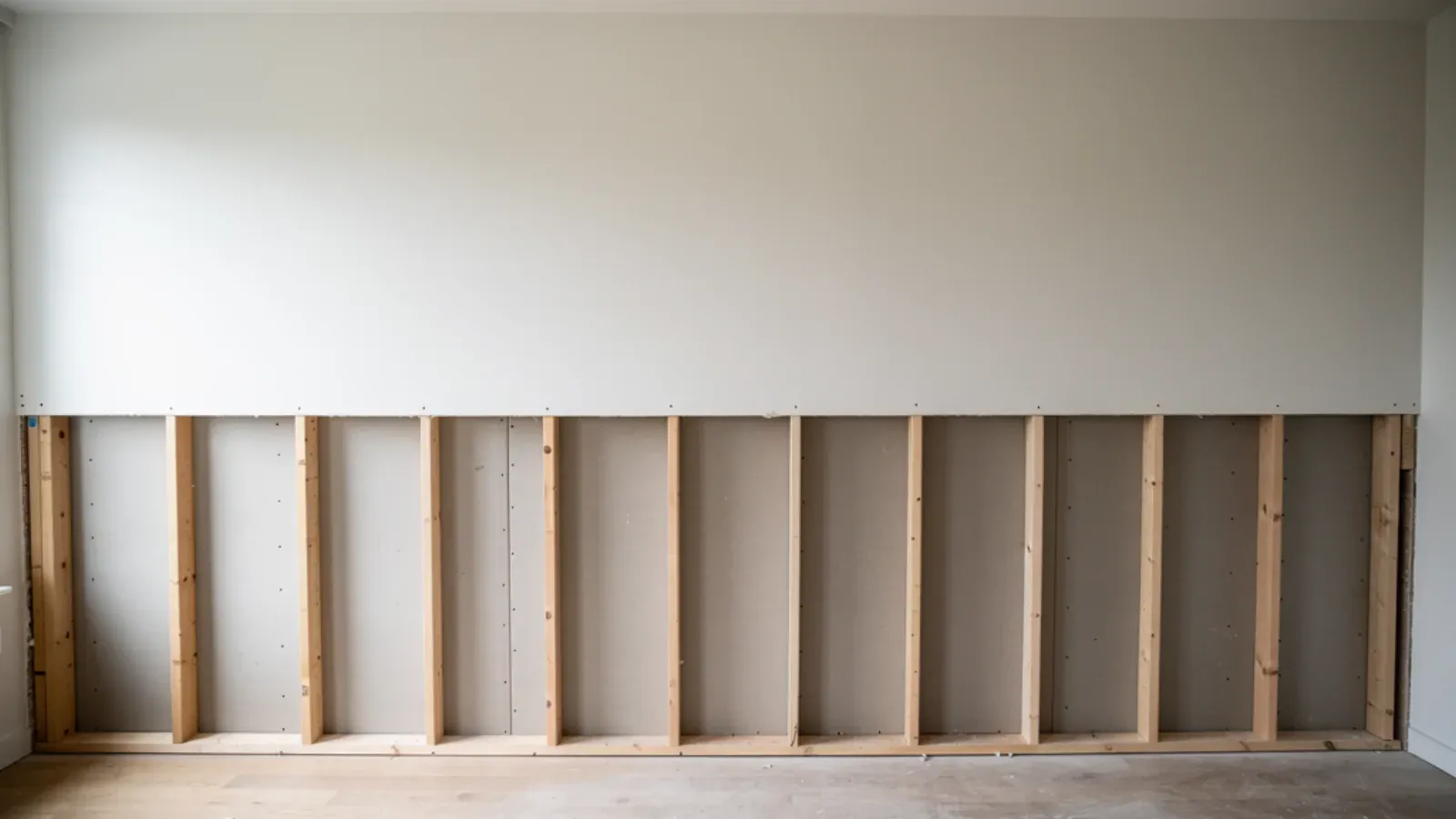
A finished demo isn’t just an empty room, it’s a room that’s ready for whatever comes next. Cambridge Elite Drywall & Plaster leaves the framing broom-clean, flags anything unusual found behind the walls, such as old knob-and-tube wiring or undocumented plumbing, and coordinates directly with the next trade or handles the rebuild itself if the same crew is doing the install. On a renovation with a tight schedule, that handoff is often what keeps the whole project on track.
Materials & standards
Products & materials we use
- USG Sheetrock
- National Gypsum Gold Bond
- CertainTeed
- Durock cement board
Standards & codes we work to
- MA 780 CMR (Massachusetts State Building Code)
- EPA RRP lead-safe work practices for pre-1978 housing
- MA Dept. of Labor Standards asbestos regulations
- Massachusetts Construction Supervisor License (CSL)
- Massachusetts Home Improvement Contractor (HIC) registration
- EPA RRP Lead-Safe Certified Firm
What the terms mean
- Lath and plaster removal
- Popcorn ceiling
- Asbestos testing
- Negative air
- Dust containment
- Poly sheeting
- Debris disposal
- Gut renovation
- Tear-out
Options & variants
| Option | When it applies | Cost |
|---|---|---|
| Selective demo | A single wall or room targeted for a renovation | Lower |
| Full room or unit gut demo | Kitchen, bathroom, or whole-interior remodel | Moderate to higher |
| Lath-and-plaster removal | Pre-1940 plaster walls or ceilings being converted to drywall | Higher, more labor and disposal weight |
| Popcorn ceiling removal with testing | Textured ceilings applied before roughly the 1980s | Testing fee plus removal, varies by result |
What affects cost
- • Total square footage and number of rooms being demolished
- • Whether the material is plaster or drywall, since plaster is heavier and costs more to remove and dispose of
- • Whether asbestos or lead testing is needed before disturbing pre-1980s texture or pre-1978 paint
- • The scope of dust containment required, especially in an occupied home versus a vacant unit
- • Disposal and dumpster access, which can be tight on Cambridge's dense urban lots
What to expect
- 1
Walk the space
Cambridge Elite Drywall & Plaster walks the space with you and scopes exactly what's coming out and what's staying.
- 2
Test before disturbing
If the material is a pre-1980s popcorn texture or joint compound of unknown age, it's tested for asbestos, and pre-1978 paint is treated as lead-safe work under EPA RRP.
- 3
Set up containment
Plastic sheeting seals off the work area, with negative air equipment added if the building is occupied.
- 4
Tear out and haul away
The old drywall or plaster is torn out, bagged, and hauled off site.
- 5
Leave it ready
The framing is left broom-clean and ready for the next trade.
When this isn’t the right call
- If the goal is a small patch or a single recurring crack rather than a full tear-out, that's drywall repair and patching or crack repair, not demolition.
- If the plaster is structurally sound and the goal is to repair or convert it in place rather than remove it, that's a plaster repair or conversion job.
- If the drywall is actively wet from a recent leak and needs urgent removal, that's water damage repair, not a scheduled demo.
Frequently asked questions
Do you test for asbestos before removing old plaster or popcorn ceilings? +
Yes, on any material old enough to be a concern, generally popcorn texture or joint compound applied before the 1980s. Cambridge Elite Drywall & Plaster tests before disturbing it, following MA Dept. of Labor Standards protocol.
How do you keep dust from spreading through the rest of my home? +
The work area is sealed off with plastic sheeting, and for occupied homes the crew sets up negative air equipment to keep dust contained to the demo zone rather than drifting through the house.
Can you work while I'm still living in the house? +
For selective demo on a single room, often yes, with containment keeping the rest of the home livable. A full gut is easier and faster with the space vacant.
What happens to the debris? +
It's bagged on site and hauled away for proper disposal, factored into the job scope so there's no separate dumpster arrangement needed on your end.
Do you handle lead paint on pre-1978 walls? +
Yes. Cambridge Elite Drywall & Plaster is an EPA RRP Lead-Safe Certified Firm and follows lead-safe work practices whenever pre-1978 paint is disturbed during demo.
Can you also do the new drywall install after demo? +
Yes, this is common. Many renovation clients have the same crew handle demo through to the finished, paint-ready wall so nothing gets lost in a handoff between subcontractors.